Blog
The Ultimate Guide to Caring for Embroidered and Delicate Fabrics

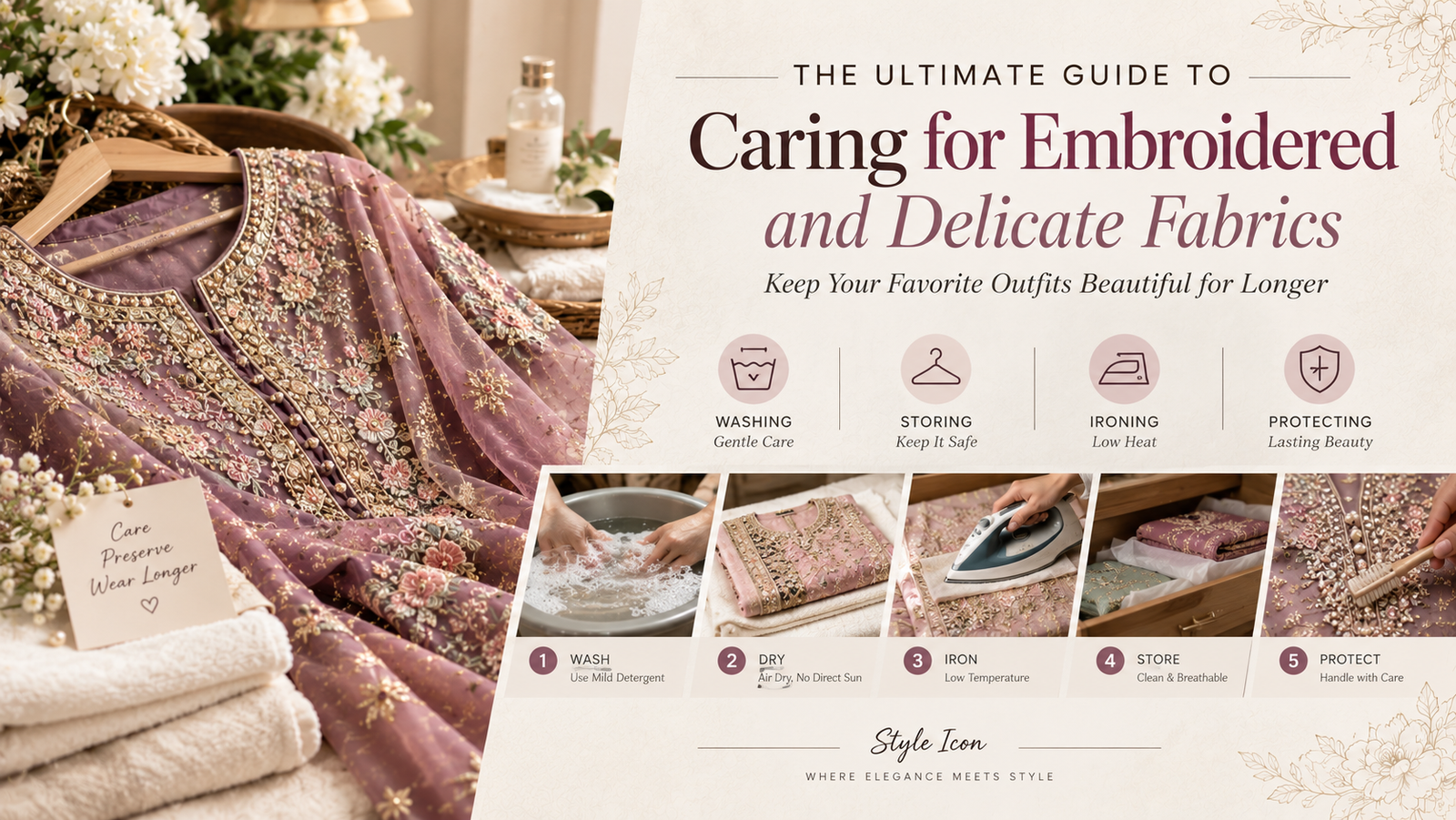
Embroidered outfits and delicate fabrics bring elegance, beauty, and sophistication to traditional women's fashion. From intricately embroidered suits to beautifully embellished dupattas, these garments often feature detailed craftsmanship that deserves special care.
However, delicate fabrics require a little extra attention to maintain their appearance. Incorrect washing techniques, excessive heat, improper storage, and rough handling can damage embroidery, weaken fabric fibers, or cause decorative embellishments to loosen.
Whether you have a favorite embroidered suit, a special-occasion outfit, or a delicate dupatta, understanding how to care for your garments can help keep them looking beautiful for longer.
At Style Icon, we appreciate the craftsmanship and attention to detail that make traditional clothing special. In this guide, you'll discover how to wash, dry, iron, store, and protect embroidered outfits and delicate fabrics while preserving their beauty and quality.
1. Understand Your Fabric Before Cleaning It
The first step in caring for embroidered clothing is understanding the fabric and its decorative details. Different materials respond differently to water, heat, detergents, and handling.
A cleaning method that works for one garment may damage another, so always check the care label before washing or ironing your outfit.
Silk and Silk-Blended Fabrics
Silk is known for its smooth texture and elegant appearance, but it can be sensitive to moisture, friction, and certain cleaning products.
Some silk garments may require professional dry cleaning, particularly when they feature intricate embroidery or embellishments.
Avoid rubbing silk aggressively or applying water directly to visible stains without first checking the care instructions.
Chiffon and Lightweight Fabrics
Chiffon and similar lightweight materials can be delicate and susceptible to snagging or tearing.
Handle these garments gently, keep them away from rough surfaces, and avoid twisting or wringing them after washing.
When drying lightweight fabrics, support the garment properly to prevent stretching.
Cotton and Cotton Blends
Cotton garments can often be easier to maintain than some other delicate fabrics, but embroidered cotton still requires attention.
Check the care label for washing temperature, drying instructions, and ironing guidance. Embroidered areas may need extra protection during cleaning and pressing.
Organza and Net Fabrics
Organza and net fabrics can lose their shape or become damaged if handled roughly.
Avoid pulling at loose threads, snagging the material on jewelry, or placing heavy garments on top of delicate pieces.
Embroidered and Embellished Garments
Clothing featuring sequins, beads, metallic threads, stones, or decorative appliqués requires particular care.
Some embellishments may loosen, discolor, or become damaged when exposed to water, heat, or strong detergents.
Care tip: If you are unsure which cleaning method is suitable for your garment, consult a professional cleaner experienced in handling embroidered and embellished clothing.
2. How to Wash Embroidered Clothes Safely
Washing embroidered clothes requires a gentle approach. The aim is to remove dirt and odors without damaging the fabric, decorative stitching, or embellishments.
Before cleaning your garment, check the care label and inspect it for loose threads, missing beads, or delicate decorative details.
Hand-Washing Delicate Garments
If the care label allows hand-washing, follow these steps:
Fill a clean basin with cool or lukewarm water, according to the garment's care instructions.
Add a small amount of mild detergent suitable for the fabric.
Submerge the garment gently without rubbing or scrubbing embroidered areas.
Move the garment carefully through the water to help release dirt.
Rinse gently with clean water if the care instructions recommend rinsing.
Support the garment while lifting it from the basin.
Press out excess water carefully without twisting or wringing the fabric.
Avoid leaving delicate garments soaking for extended periods, especially if they contain contrasting dyes or decorative embellishments.
Can You Machine-Wash Embroidered Clothing?
Some embroidered garments may be machine-washable, but this depends on the fabric, stitching, embellishments, and care label.
If machine-washing is permitted:
Turn the garment inside out if appropriate.
Place it in a protective mesh laundry bag.
Use a delicate cycle and the recommended water temperature.
Choose a mild detergent suitable for the fabric.
Wash it separately or with compatible lightweight garments.
Avoid washing it with items featuring zippers, hooks, or rough fastenings.
Do not machine-wash garments with fragile beads, loose embellishments, intricate metallic work, or dry-clean-only labels unless a qualified cleaner confirms that the method is safe.
Avoid Harsh Cleaning Products
Strong detergents, bleach, and aggressive stain removers may damage delicate fibers or affect the color of embroidery.
Use products recommended for the garment's material and care requirements.
Care tip: Always follow the care label over general washing advice. When in doubt, professional cleaning is usually the safer option for valuable or heavily embellished garments.
3. How to Remove Stains from Delicate Fabrics
Stains can be particularly challenging on embroidered outfits because the cleaning method must suit both the fabric and its decorative details.
Acting promptly can help, but aggressive treatment may make the problem worse.
Treat Spills Gently
If a spill occurs, use a clean, absorbent cloth to blot the affected area gently.
Avoid rubbing, as friction can push the stain deeper into the fibers or damage delicate embroidery.
Avoid Unverified Home Remedies
Household products such as vinegar, baking soda, lemon juice, and strong stain removers are not suitable for every fabric.
They may cause discoloration, leave residue, or affect decorative threads and embellishments.
Before applying any cleaning product, check the garment's care instructions and seek professional advice when necessary.
Be Careful with Oil and Makeup Stains
Oil, foundation, lipstick, and other cosmetic stains may require specialized treatment.
Avoid applying heat, as it can make certain stains more difficult to remove. Do not scrub the affected area, particularly if it contains embroidery or metallic detailing.
When to Seek Professional Cleaning
Consider professional cleaning for:
Heavily embroidered wedding outfits.
Garments featuring beads, sequins, or decorative stones.
Silk and other sensitive fabrics.
Large or stubborn stains.
Clothing with contrasting colors that may bleed.
Vintage or particularly valuable garments.
Care tip: Never assume that a cleaning product is safe simply because it works on ordinary clothing. Delicate fabrics and embellishments may react differently.
Purus lobortis senectus faucibus imperdiet rutrum porttitor tincidunt laoreet parturient consectetur tortor ad adipiscing id a duis hendrerit diam. A at nec rutrum nam molestie suspendisse scelerisque platea a ut commodo volutpat ullamcorper penatibus dis quis felis justo porta montes nam a vestibulum tristique parturient parturient eget tincidunt. Semper dui.
4. Dry Embroidered Outfits the Right Way
Drying is just as important as washing when caring for delicate garments. Excessive heat, direct sunlight, and improper handling can affect fabric color, shape, and decorative details.
Avoid Twisting or Wringing
After washing, do not twist or wring delicate clothing to remove water.
Instead, support the garment and gently press out excess moisture. If the care instructions allow it, you can place the garment on a clean, absorbent towel and roll the towel carefully to help absorb water.
Air-Dry When Appropriate
Many delicate garments benefit from gentle air-drying, but the correct method depends on the fabric and care label.
Some garments should be dried flat to help maintain their shape, while others may be suitable for hanging.
Avoid hanging wet, heavy embroidered garments if their weight could stretch the fabric or distort the shoulders.
Keep Garments Away from Harsh Sunlight
Direct sunlight can fade some fabrics and decorative threads.
Choose a clean, well-ventilated area away from intense sunlight and excessive heat.
Avoid High-Heat Dryers
Tumble dryers can expose delicate garments to heat and friction that may damage fibers, stitching, and embellishments.
Unless the care label explicitly permits tumble-drying, choose an appropriate air-drying method.
Care tip: Make sure a garment is completely dry before placing it in long-term storage. Storing damp clothing can encourage mildew and unpleasant odors.
5. How to Iron Embroidered Clothes Without Damage
Ironing delicate garments requires careful temperature control and attention to decorative areas.
Excessive heat can flatten texture, damage embellishments, create shine, or affect delicate fibers.
Check the Ironing Instructions
Before ironing, review the garment's care label.
If the label advises against ironing, or if the outfit contains fragile embellishments that may be damaged by heat, seek professional advice.
Turn the Garment Inside Out
If ironing is permitted, turning the garment inside out can help protect the visible surface.
For embroidered clothing, place a clean pressing cloth between the iron and the fabric when appropriate.
Avoid pressing directly over beads, sequins, stones, metallic threads, or raised embroidery.
Use the Correct Temperature
Select a temperature suitable for the fabric. Delicate materials often require lower heat, but the correct setting depends on the garment's composition.
If the instructions permit it, test the iron on a small, inconspicuous area before treating the entire garment.
Consider Steam Carefully
Steam can help release wrinkles from some fabrics, but it is not appropriate for every material or embellishment.
Some decorative details can be affected by moisture or heat. Check the care instructions before steaming an embroidered outfit.
Use a Professional Pressing Service When Necessary
For valuable formalwear, heavily embellished suits, and delicate fabrics, a professional garment-care service may be the safest choice.
Care tip: Never iron directly over decorative stones, sequins, beads, or raised embroidery. Protecting these details helps preserve the appearance of your outfit.
6. Store Embroidered Suits and Delicate Fabrics Properly
Proper storage helps protect clothing from dust, friction, sunlight, moisture, and accidental damage.
A few simple habits can make it easier to preserve your favorite traditional outfits between wears.
Clean Garments Before Long-Term Storage
Before storing a special-occasion outfit for an extended period, make sure it is clean and completely dry.
Body oils, perspiration, perfume, and food residue may contribute to discoloration or attract pests over time.
Follow the garment's cleaning instructions before putting it away.
Choose the Right Hanging Method
Some garments can be stored on padded hangers, while others are better folded.
Lightweight outfits with delicate shoulder areas may be suitable for padded hangers if hanging is permitted. Heavy embroidered garments may stretch under their own weight and should be stored flat or folded carefully.
Fold Delicate Clothing with Care
If folding is appropriate, place the garment on a clean surface and fold it gently.
For heavily embroidered pieces, use clean, smooth tissue paper suitable for textile storage between folds to help reduce friction and creasing.
Avoid placing sharp folds directly across raised embroidery or bulky embellishments whenever possible.
Use Breathable Storage
Choose a clean, dry storage space with good ventilation.
Breathable garment covers can help protect clothing from dust while allowing air circulation. Avoid sealing garments in plastic for long-term storage unless a textile-care professional recommends a suitable method for the specific garment.
Keep Clothing Away from Moisture and Sunlight
Store outfits away from damp walls, direct sunlight, and areas with significant temperature or humidity changes.
Inspect stored garments occasionally to ensure they remain dry and free from unusual odors or signs of damage.
Care tip: Avoid placing heavy items on top of delicate garments. Pressure can flatten embroidery, distort embellishments, and create unwanted creases.
7. Protect Embroidery, Beads, and Decorative Details
Intricate embroidery is often the most distinctive feature of a traditional outfit. Preserving it requires careful handling before, during, and after wear.
Inspect Your Outfit Before Wearing It
Check the garment for loose threads, missing beads, or snagged embellishments before putting it on.
Addressing small issues early may help prevent further damage.
Avoid Snagging
Jewelry, handbags, rough surfaces, and sharp objects can catch on delicate stitching.
Put on your outfit carefully and check that accessories do not rub repeatedly against embroidered areas.
Handle Embellished Sections Gently
When dressing or removing the garment, avoid pulling on decorative details.
Use the garment's appropriate fastenings and support the fabric instead of tugging at the embroidery.
Store Embellished Garments Separately
If possible, store heavily embroidered clothing separately from rough fabrics, garments with hooks, and accessories that could catch on the stitching.
A breathable garment cover or a clean storage container suitable for textiles can help reduce contact with dust and other items.
Repair Minor Damage Promptly
If a thread becomes loose or an embellishment starts to detach, avoid pulling it further.
A qualified tailor or garment-care professional can help repair delicate decorative work before the damage spreads.
Care tip: Treat embroidery as a delicate decorative surface. Gentle handling can help preserve the detail and appearance of your outfit.
8. Protect Delicate Outfits from Perfume, Makeup, and Sweat
Everyday products and body moisture can affect delicate garments, especially when they come into contact with sensitive fabrics or decorative threads.
Taking a few precautions before dressing can help reduce the need for frequent cleaning.
Apply Perfume Before Getting Dressed
Allow perfume, deodorant, and body products to dry before putting on your outfit.
Direct contact with fragrances or cosmetic products may leave marks or affect certain dyes and embellishments.
Let Makeup Set
Allow foundation, lipstick, and other cosmetics to settle before putting on a delicate garment.
Be particularly careful around necklines, collars, and dupattas that may come into contact with makeup.
Reduce Friction During Wear
Repeated rubbing against handbags, jewelry, or rough surfaces can damage delicate fibers and embroidery.
Choose accessories that work comfortably with your outfit and avoid carrying bags in a way that causes constant friction against decorative areas.
Air Out Garments After Wearing
After an event, allow the garment to air out in a clean, well-ventilated area when its care instructions permit.
Do not leave worn clothing damp or compressed in a bag for extended periods.
If the garment has visible stains or persistent odors, follow the care label before attempting to clean it.
9. How Often Should You Clean Embroidered Clothing?
The ideal cleaning frequency depends on the fabric, how long you wore the garment, the occasion, and whether it has visible stains or odors.
Not every outfit requires washing after every wear, but clothing should never be stored for long periods without appropriate care.
After Light Use
If an outfit was worn briefly and remains clean, airing it out may be sufficient before returning it to storage, provided its care instructions allow this approach.
Inspect the garment for stains, perspiration, and damage before putting it away.
After Long Events
Wedding ceremonies, receptions, and festive celebrations may expose clothing to perspiration, food spills, cosmetics, and environmental dirt.
Inspect your outfit carefully after the event and arrange appropriate cleaning when needed.
Before Long-Term Storage
Clean the garment according to its care label before storing it for an extended period.
This is especially important for special-occasion clothing that may remain unworn for months.
Avoid Unnecessary Washing
Frequent cleaning can place additional stress on some delicate fibers and embellishments.
However, delaying necessary cleaning may allow stains and body oils to become more difficult to remove.
The goal is to clean your garment when needed using the safest method for its material and construction.
10. Common Mistakes to Avoid When Caring for Delicate Fabrics
Even well-intentioned garment care can cause damage when the wrong methods are used.
Avoid these common mistakes to help protect your traditional wardrobe.
Ignoring care labels: Always check the garment's instructions before washing, drying, ironing, or storing it.
Using harsh detergents: Strong cleaning products may damage delicate fibers or alter decorative details.
Scrubbing embroidered areas: Friction can loosen stitching and damage embellishments.
Wringing wet garments: Twisting delicate fabric can stretch or distort the material.
Applying direct heat to embroidery: High temperatures can damage beads, sequins, metallic threads, and decorative stones.
Storing clothing while damp: Moisture can contribute to mildew, unpleasant odors, and fabric damage.
Using plastic for long-term storage without considering ventilation: Some storage methods can trap moisture and may not be suitable for delicate textiles.
Leaving stains untreated for too long: Some stains become more difficult to remove as they set.
Ignoring loose threads or embellishments: Small issues can worsen if the garment continues to be worn without repair.
By avoiding these mistakes, you can help maintain the beauty and wearability of your embroidered clothing.
11. Create a Simple Garment-Care Routine
Caring for delicate clothing becomes easier when you follow a consistent routine.
You do not need complicated products or extensive equipment. The most important steps are gentle handling, appropriate cleaning, careful drying, and suitable storage.
Before Wearing
Inspect the garment for loose threads or damaged embellishments.
Make sure the outfit is clean and properly stored.
Apply perfume and cosmetics before dressing.
Choose accessories that will not snag the fabric.
After Wearing
Check for stains, perspiration, and visible dirt.
Allow the garment to air out if its care instructions permit.
Avoid leaving it crumpled in a bag.
Arrange cleaning if necessary.
Before Storing
Follow the recommended cleaning method.
Make sure the garment is completely dry.
Fold or hang it according to its fabric and weight.
Use clean, suitable storage materials.
Keep it in a dry place away from direct sunlight.
A simple routine can help you care for your clothing consistently without making garment maintenance feel overwhelming.
Keep Your Favorite Traditional Outfits Beautiful with Style Icon
Embroidered outfits are more than clothing. Their intricate details, decorative stitching, and carefully finished designs contribute to the elegance that makes traditional fashion so special.
With the right care, you can help protect these details and enjoy your favorite outfits for many occasions.
From choosing suitable washing methods to storing delicate fabrics correctly, small steps can make a meaningful difference. Always follow the garment's care label, handle embroidery gently, avoid unnecessary heat and friction, and seek professional cleaning when a garment requires specialized attention.
At Style Icon, we celebrate traditional fashion through elegant designs and an appreciation for craftsmanship. Whether you are caring for an embroidered suit, a delicate dupatta, or a special-occasion ensemble, thoughtful garment care helps preserve the beauty of your wardrobe.
Style Icon — Where Elegance Meets Style.
Final Thoughts
Caring for embroidered and delicate fabrics does not have to be difficult. By understanding your garment's material, following its care instructions, cleaning it gently, and storing it properly, you can help preserve its appearance and decorative details.
Remember these essential principles:
Check the care label before cleaning.
Use gentle washing methods when permitted.
Treat stains carefully and avoid aggressive scrubbing.
Dry garments using a suitable method.
Protect embroidery from direct heat.
Store clothing in a clean, dry, and appropriate environment.
Repair loose threads and embellishments promptly.
A little extra attention can help your traditional clothing remain beautiful, comfortable, and ready for future celebrations.
Discover timeless elegance with Style Icon — Where Elegance Meets Style.