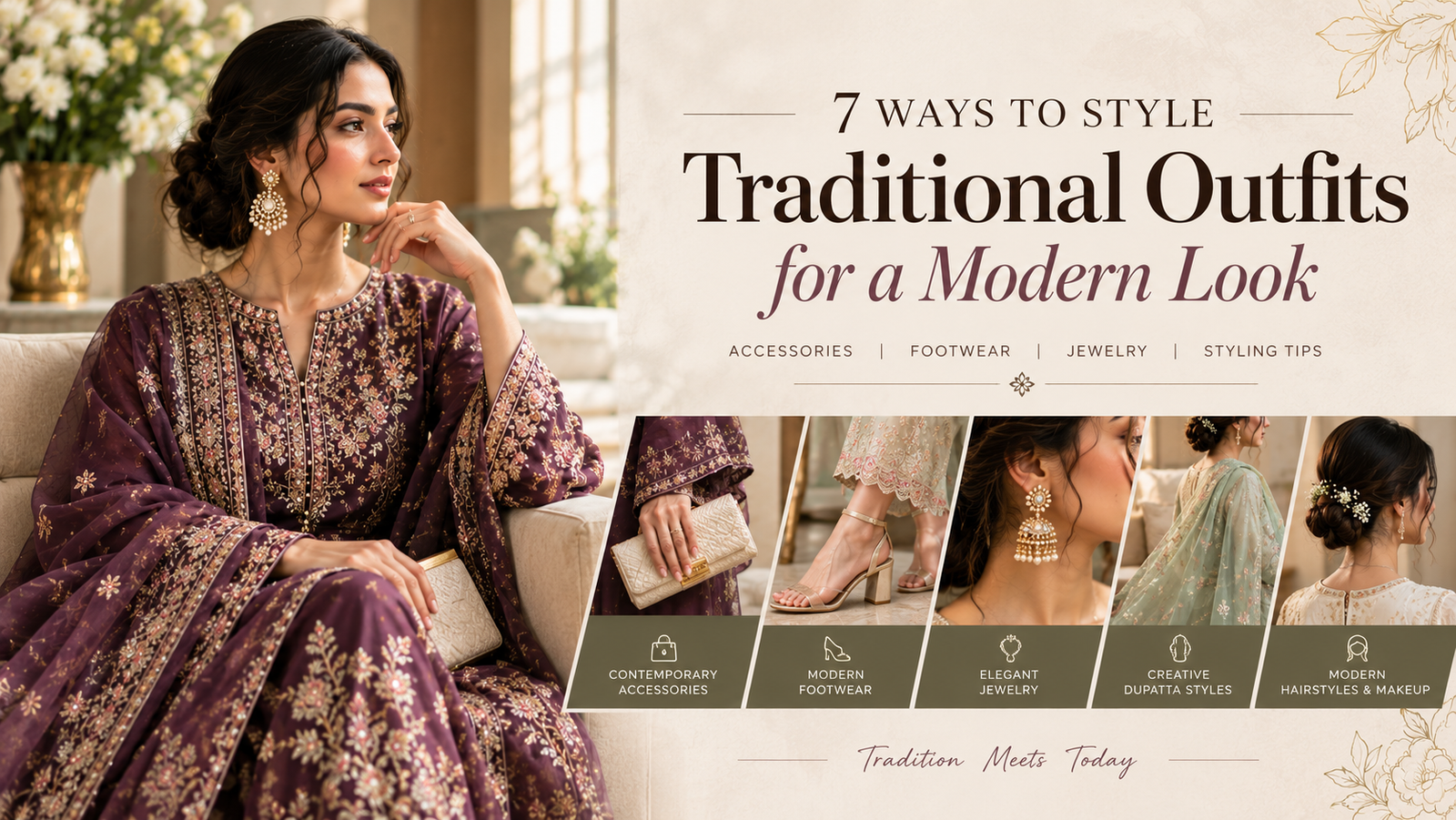
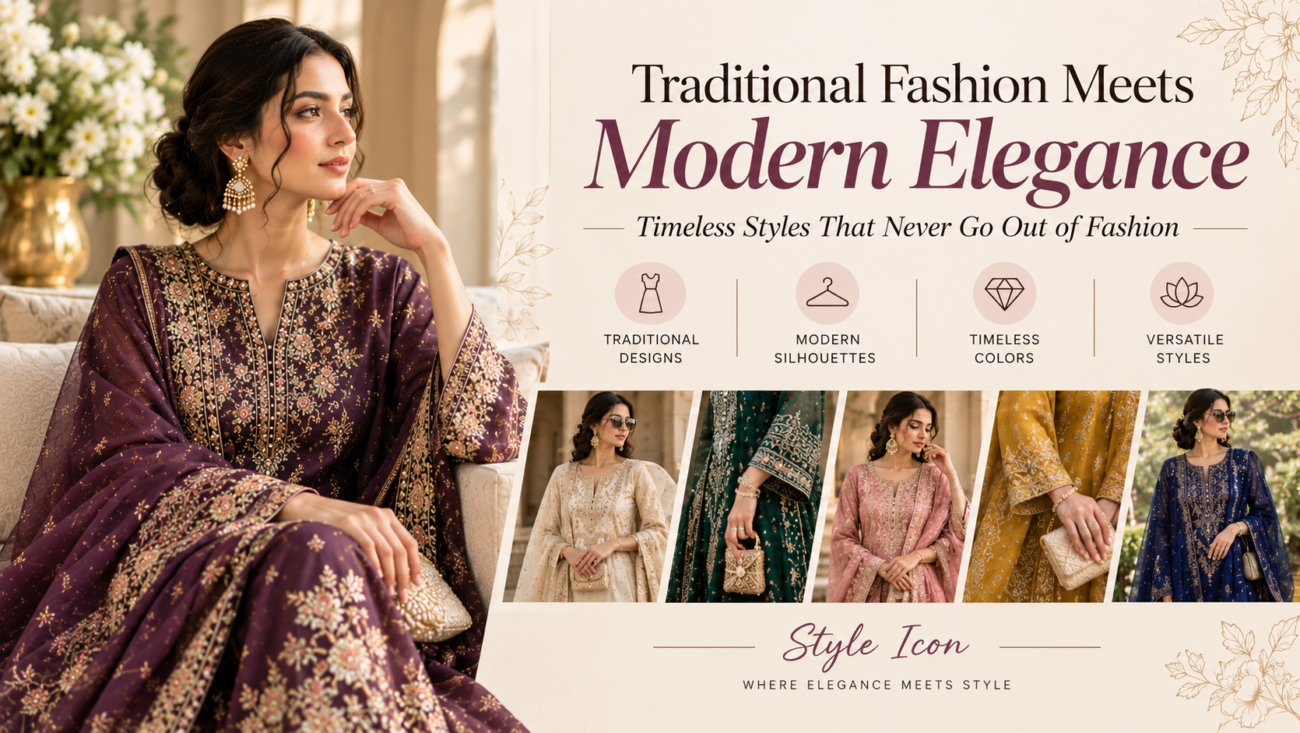
One of the easiest ways to modernize traditional clothing is by introducing contemporary accessories. The right finishing touches can make a familiar outfit feel completely different without requiring you to change the entire ensemble.
For example, a traditional embroidered suit can look more modern when paired with a structured handbag, a minimalist clutch, or a sleek belt that complements the outfit's silhouette.
Accessories That Elevate Traditional Wear
Consider incorporating these accessories into your wardrobe:
Structured handbags: Add a polished, contemporary touch to embroidered suits and traditional dresses.
Minimalist clutches: Complement formal outfits without competing with intricate embroidery.
Statement belts: Highlight the waistline of suitable silhouettes and create a more defined shape.
Modern sunglasses: Add a fashionable touch to daytime gatherings and outdoor events.
Delicate hair accessories: Complete your look with subtle details that complement your outfit.
The key is to choose accessories that enhance your clothing rather than overwhelm it.
If your traditional outfit features heavy embroidery or elaborate embellishments, keep your accessories relatively simple. For more minimal outfits, a statement accessory can become the focal point of your look.
Style tip: Start with one contemporary accessory and build your outfit around it. This creates a coordinated appearance without making your look feel overly complicated.
2. Experiment with Modern Footwear
Footwear can dramatically change the overall appearance of traditional clothing. While classic sandals and traditional footwear remain elegant choices, contemporary shoes can give your outfit a fresh and unexpected finish.
The best footwear depends on your outfit, the occasion, and how comfortable you want to feel throughout the day.
Heels for an Elegant Appearance
Block heels, sleek pumps, and understated heeled sandals can complement traditional suits and formal ethnic wear. They work particularly well for weddings, evening celebrations, and occasions that call for a polished look.
Flats for Effortless Style
Minimalist flats, embellished sandals, and pointed-toe flats offer a comfortable alternative for family gatherings, festive events, and daytime occasions.
Choose styles that coordinate with the colors and decorative details of your outfit.
Contemporary Shoes for a Casual Look
For relaxed occasions, certain traditional outfits can work beautifully with clean, modern footwear. Simple sneakers may complement more casual silhouettes, particularly when the outfit has a contemporary cut and minimal embellishment.
This combination creates an interesting contrast between traditional clothing and modern street style.
Style tip: Consider the length of your trousers or shirt when choosing footwear. The right proportions can make your outfit look more balanced and intentional.
3. Mix Traditional Jewelry with Minimalist Pieces
Jewelry is an important part of traditional fashion, but modern styling often involves creating a balance between decorative statement pieces and understated accessories.
Instead of wearing multiple elaborate pieces together, choose jewelry that complements the embroidery, neckline, and overall design of your outfit.
Choose One Statement Piece
If your outfit features an embroidered neckline, consider wearing simple earrings and skipping a heavy necklace. This allows the embroidery to remain the center of attention.
Alternatively, if your outfit has a relatively simple neckline, a statement necklace can add personality and elegance.
Try Minimalist Jewelry
Small hoops, delicate chains, slim bracelets, and understated rings can bring a contemporary feel to traditional clothing.
These pieces work particularly well with embroidered suits that already contain decorative details.
Mix Classic and Modern Styles
Combining traditional jewelry with modern designs can create a distinctive look. For example, you might pair a classic pair of earrings with a contemporary ring or style a simple bracelet with a traditional outfit.
The goal is to create contrast while maintaining visual harmony.
Style tip: Follow the principle of balance. When your outfit is heavily embellished, choose simpler jewelry. When your clothing is understated, use accessories to introduce more visual interest.
4. Style Your Dupatta in New and Creative Ways
A dupatta is one of the most versatile elements of traditional clothing. It can add color, texture, movement, and elegance to an outfit while offering countless styling possibilities.
Although traditional draping styles remain beautiful, experimenting with different arrangements can give your ensemble a modern appearance.
Try a One-Shoulder Drape
Draping your dupatta over one shoulder creates a relaxed and polished look. This style can work well for festive gatherings and semi-formal occasions, depending on the outfit.
Create a Neat, Structured Drape
For a more contemporary appearance, arrange the dupatta neatly over both shoulders. This styling method can complement straight-cut suits and coordinated traditional ensembles.
Let the Fabric Flow Naturally
A lightweight dupatta can create an elegant, effortless appearance when allowed to fall naturally. This works particularly well when the fabric and embroidery are important features of the outfit.
Highlight Decorative Borders
If your dupatta features intricate embroidery or embellished borders, arrange it so these details remain visible.
Style tip: Choose a draping style that suits the outfit's silhouette and allows you to move comfortably. A thoughtfully styled dupatta can make even a familiar traditional suit feel new.
5. Combine Traditional Clothing with Modern Silhouettes
Modern traditional fashion is not only about accessories. The way you combine different garments can also create a more contemporary appearance.
Experimenting with proportions, coordinated separates, and clean silhouettes can help you refresh your wardrobe while preserving the elegance of traditional clothing.
Pair Embroidered Shirts with Tailored Trousers
An embroidered shirt paired with well-fitted trousers creates a polished look that feels both traditional and contemporary.
Straight-cut trousers offer a clean appearance, while wider-leg styles can create a more relaxed and fashion-forward silhouette.
Explore Coordinated Separates
Coordinated traditional separates allow you to experiment with different combinations. For example, a beautifully embroidered shirt can be paired with simple trousers to create a balanced look.
You can also introduce a contrasting dupatta or understated accessories to change the overall appearance.
Balance Loose and Structured Pieces
If your outfit features a flowing shirt, consider pairing it with a more structured bottom. Alternatively, wider trousers can work beautifully with a more fitted or streamlined shirt.
These combinations create visual balance and help the outfit feel intentional.
Keep the Overall Look Cohesive
Modern styling does not require abandoning traditional designs. Instead, focus on combining familiar elements in ways that reflect your personality and preferences.
Style tip: Choose one feature to emphasize, such as an embroidered shirt, a distinctive neckline, or a statement dupatta. Keep the remaining elements relatively simple to create a refined appearance.
6. Use Color Coordination to Create a Modern Outfit
Color plays an important role in the way an outfit looks and feels. Traditional clothing often features rich shades, intricate patterns, and decorative details, while contemporary fashion frequently explores coordinated palettes and understated contrasts.
Combining these approaches can help you create a modern traditional look.
Embrace Neutral Shades
Beige, cream, ivory, black, and other neutral tones can create a sophisticated foundation for traditional outfits.
An embroidered suit in a neutral shade can be paired with complementary footwear, a structured handbag, and minimalist jewelry for an understated yet elegant appearance.
Experiment with Monochromatic Styling
Monochromatic styling involves combining different tones of the same color family.
For example, a deep-toned traditional suit can be paired with accessories in a similar shade to create a coordinated look.
This approach works particularly well when the outfit features intricate embroidery or distinctive fabric textures.
Introduce Subtle Contrasts
Pairing complementary or contrasting colors can add personality to your outfit.
You might choose a dupatta that introduces a different shade or select accessories that contrast gently with the main color of your ensemble.
The key is to ensure that the colors complement each other rather than compete for attention.
Coordinate Accessories with Embroidery
If your outfit features metallic, floral, or multicolored embroidery, use these details as inspiration for selecting accessories.
For example, understated gold-toned accessories may complement gold embroidery, while neutral footwear can help balance a richly colored outfit.
Style tip: Try limiting your main outfit palette to two or three coordinated colors. This can help create a polished appearance without restricting your creativity.
7. Choose Modern Hairstyles and Makeup to Complete Your Look
Your hairstyle and makeup can bring together every element of your traditional outfit. Even small changes can influence whether your overall appearance feels classic, contemporary, or somewhere in between.
The best approach is to choose a beauty look that complements your clothing and the formality of the occasion.
Sleek Hairstyles for a Contemporary Finish
A sleek bun, a polished ponytail, or neatly styled open hair can create a modern contrast with intricate traditional embroidery.
These hairstyles also work well when you want to highlight statement earrings or an embroidered neckline.
Soft Waves for Effortless Elegance
Soft waves offer a relaxed and graceful appearance. They can complement traditional suits and flowing dupattas, particularly for family gatherings and festive celebrations.
Keep Daytime Makeup Fresh
For daytime events, consider a balanced makeup look that enhances your features without feeling too heavy.
Neutral eyeshadow, subtle blush, and a lip color that complements your outfit can create a polished appearance.
Add Definition for Evening Events
For weddings and formal celebrations, you may prefer more defined eyes, a bolder lip color, or a slightly more dramatic makeup style.
Choose elements that complement your outfit rather than competing with its embellishments.
Style tip: If your outfit is heavily embroidered or features statement jewelry, consider keeping your hairstyle and makeup relatively balanced. This allows the clothing to remain a central part of your look.
Bonus Tips for Styling Traditional Outfits with Confidence
Beyond these seven styling ideas, a few simple habits can make it easier to create modern traditional outfits.
Prioritize comfort: Choose clothing and footwear that allow you to enjoy the occasion without constant adjustments.
Pay attention to fit: Well-fitting garments can make an outfit look more polished. Check the measurements and overall silhouette before purchasing clothing online.
Avoid excessive embellishment: Combining too many statement elements can make an outfit feel visually crowded. Choose a focal point and let the remaining details complement it.
Dress for the occasion: Consider the location, timing, and formality of the event before selecting your outfit and accessories.
Experiment with your existing wardrobe: You can often create fresh combinations simply by changing your footwear, jewelry, hairstyle, or dupatta draping style.
Develop your personal style: Use trends as inspiration rather than rules. The most successful outfits reflect your preferences and make you feel confident.
Why Traditional Fashion Looks Beautiful with Modern Styling
Traditional clothing offers a rich foundation for personal expression. Its intricate embroidery, graceful silhouettes, and distinctive details create opportunities to explore different styling combinations.
Modern accessories, contemporary footwear, minimalist jewelry, and creative draping techniques allow you to refresh traditional outfits without losing their original charm.
The result is a style that celebrates both heritage and individuality.
Whether you prefer understated elegance or more expressive fashion, combining traditional clothing with contemporary elements can help you build a wardrobe that feels versatile, sophisticated, and uniquely yours.
At Style Icon, we celebrate the beauty of traditional fashion and the confidence that comes from wearing styles you love. From intricate embroidery to elegant designs, the right outfit can help you express your personality on every occasion.